Social Housing in Riasne-2
The social housing project on Velychkovskoho Street forms a cohesive fragment of the urban fabric — open, accessible, socially active, and attentive to the natural character of the site.
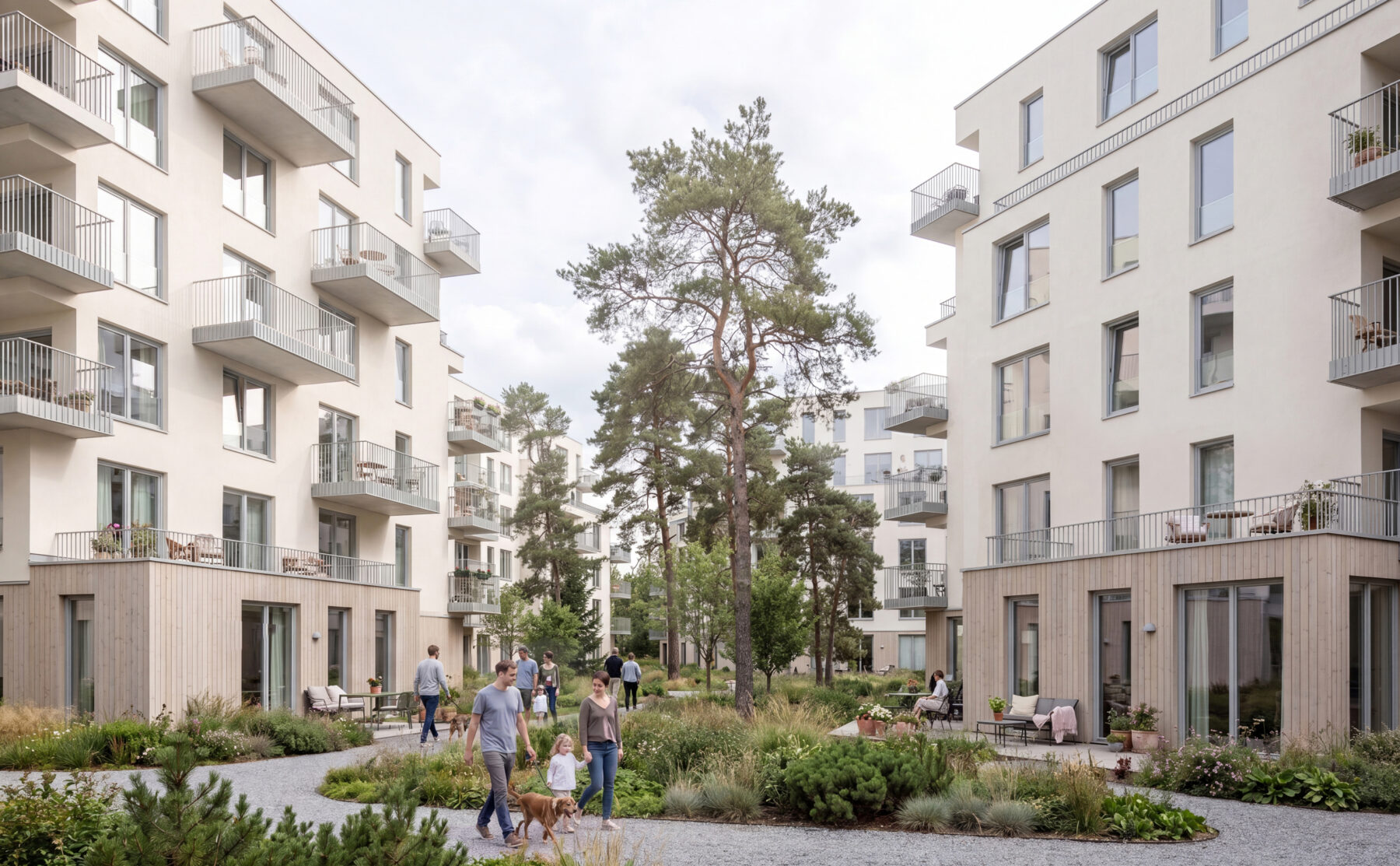
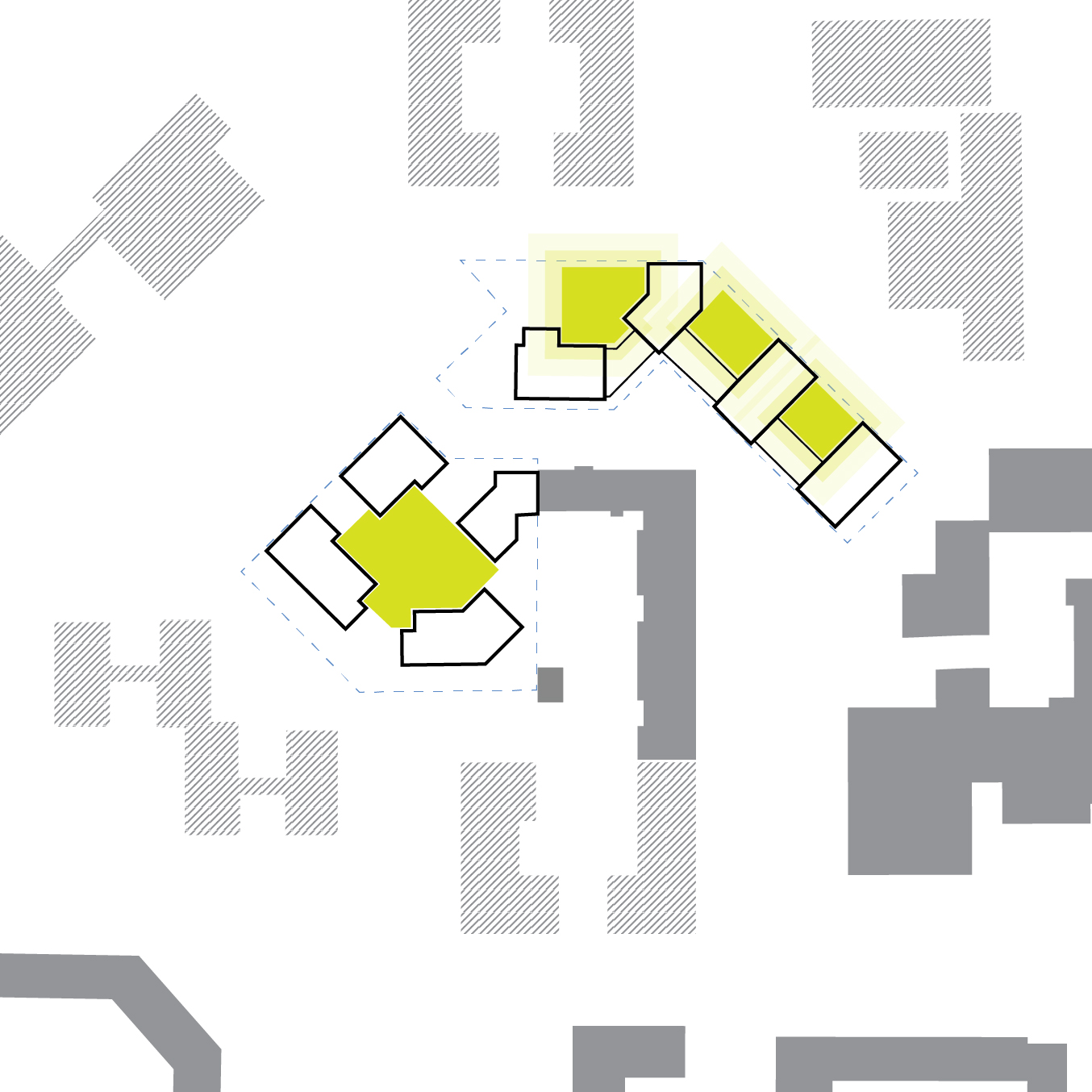
The concept is built on a balance between the pragmatism of municipal rental housing and the quality of everyday space for residents. The project establishes a clear gradation of public, semi-private, and private spaces, integrating the existing green environment into the structure of the complex.
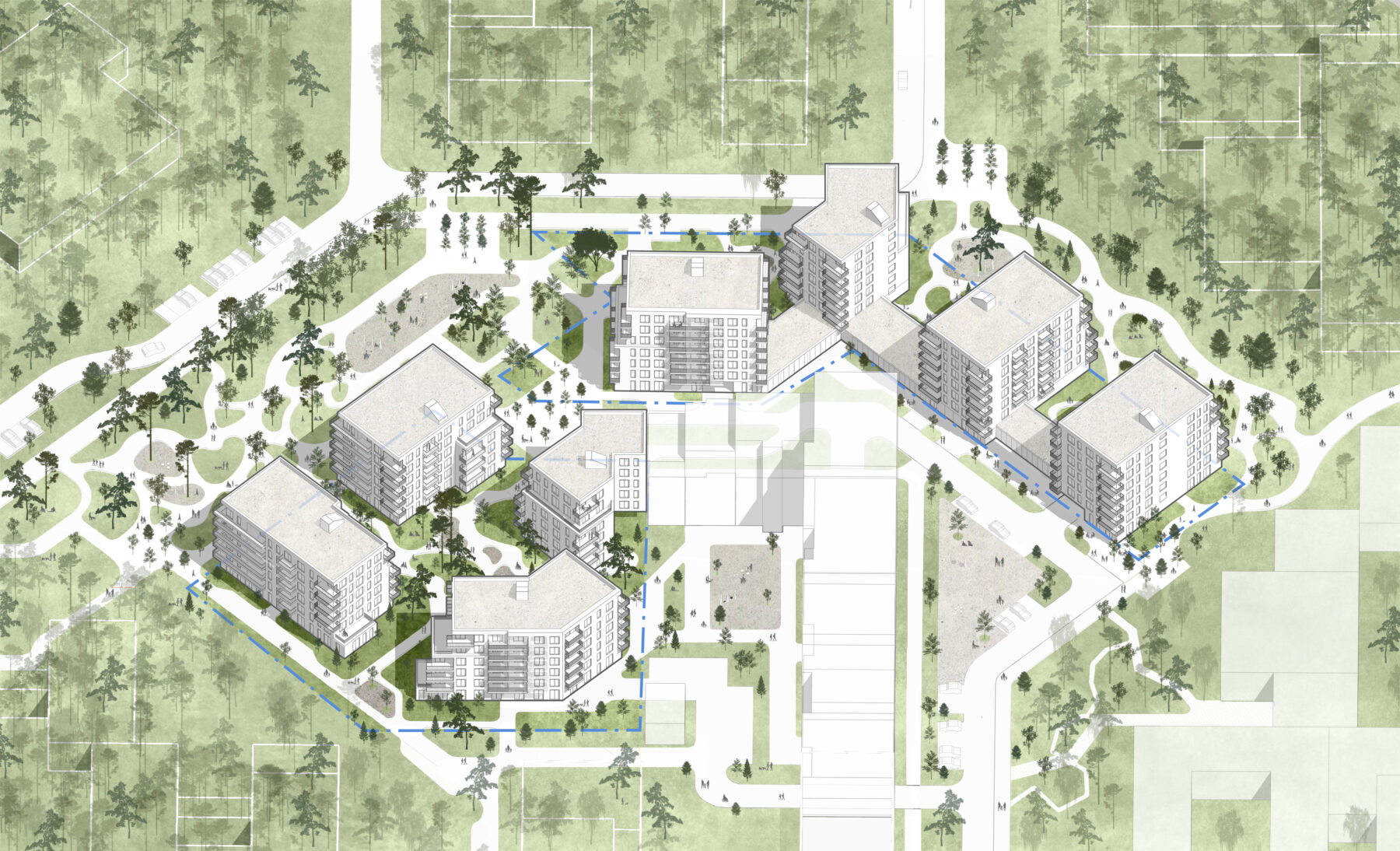
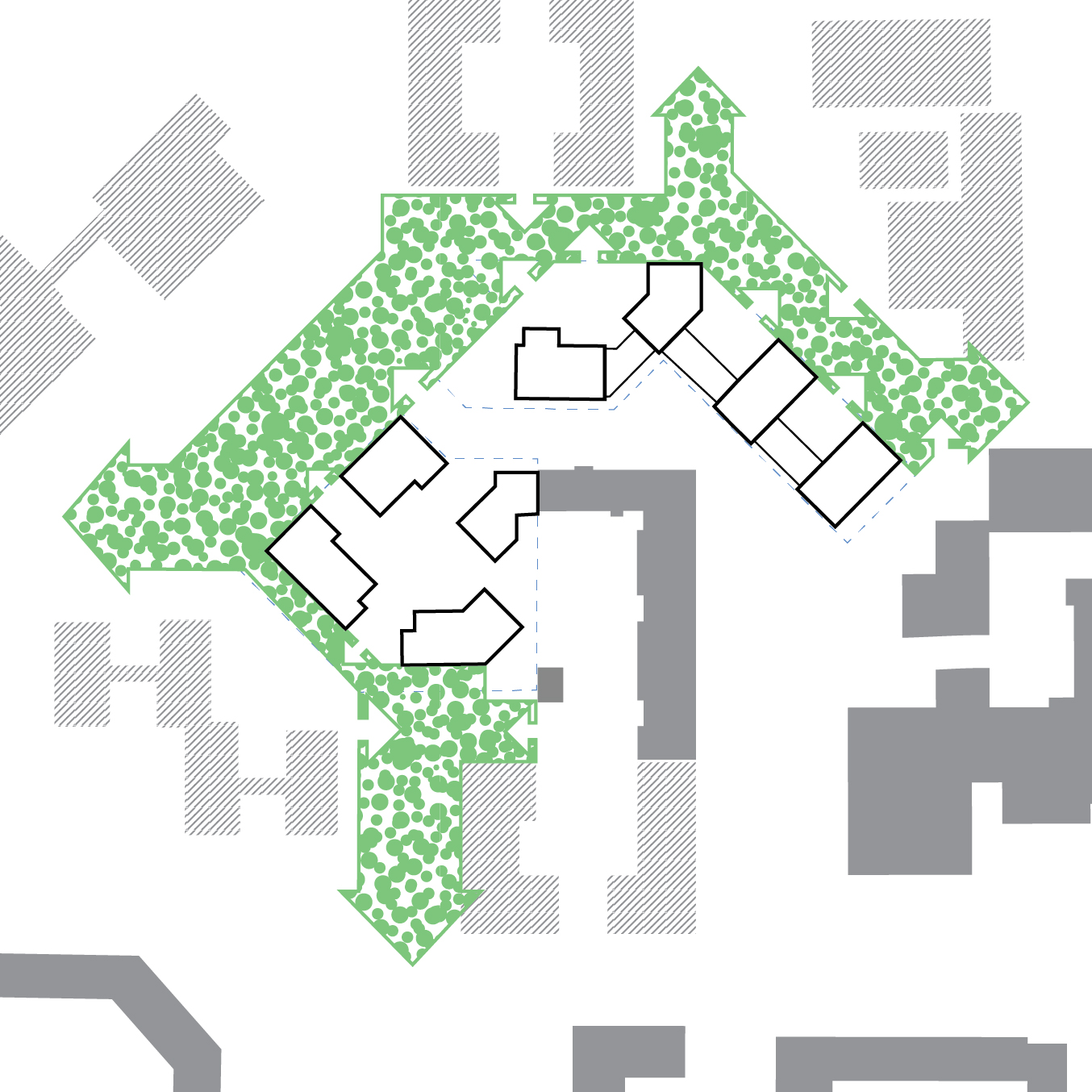
The mature trees on the site are a key asset, forming its natural character. The building layout and circulation are therefore organized to minimize disruption to the planted perimeter and preserve it as a recreational green belt.
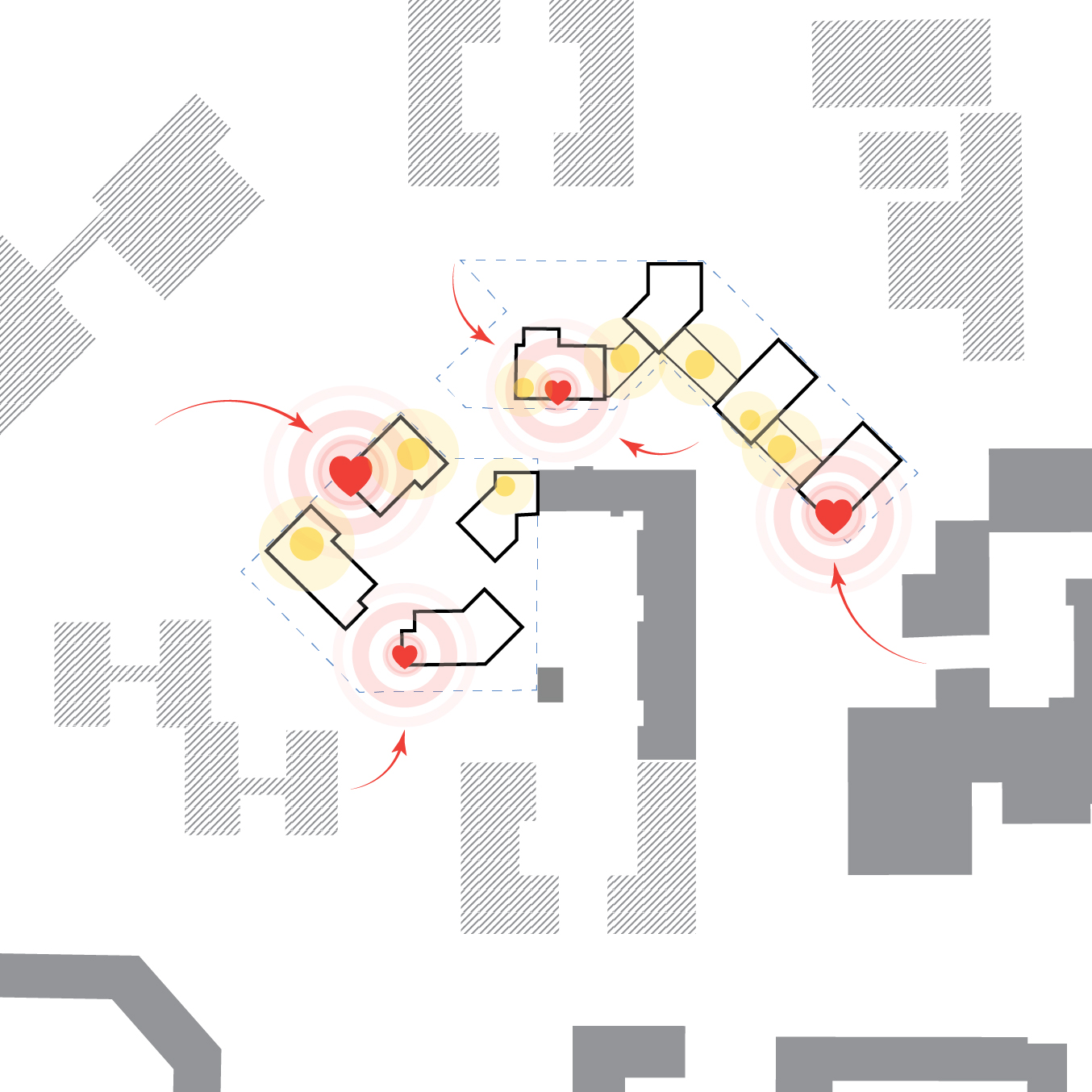
The architectural solution is based on a rational typology of single-core residential buildings. This approach avoids massive, elongated façades, improves daylight access, and allows more precise control over courtyard scale. The complex functions as a system of distinct residential clusters, linked by a clear spatial gradation — from the public urban square to open, non-transit semi-private courtyards and natural zones.
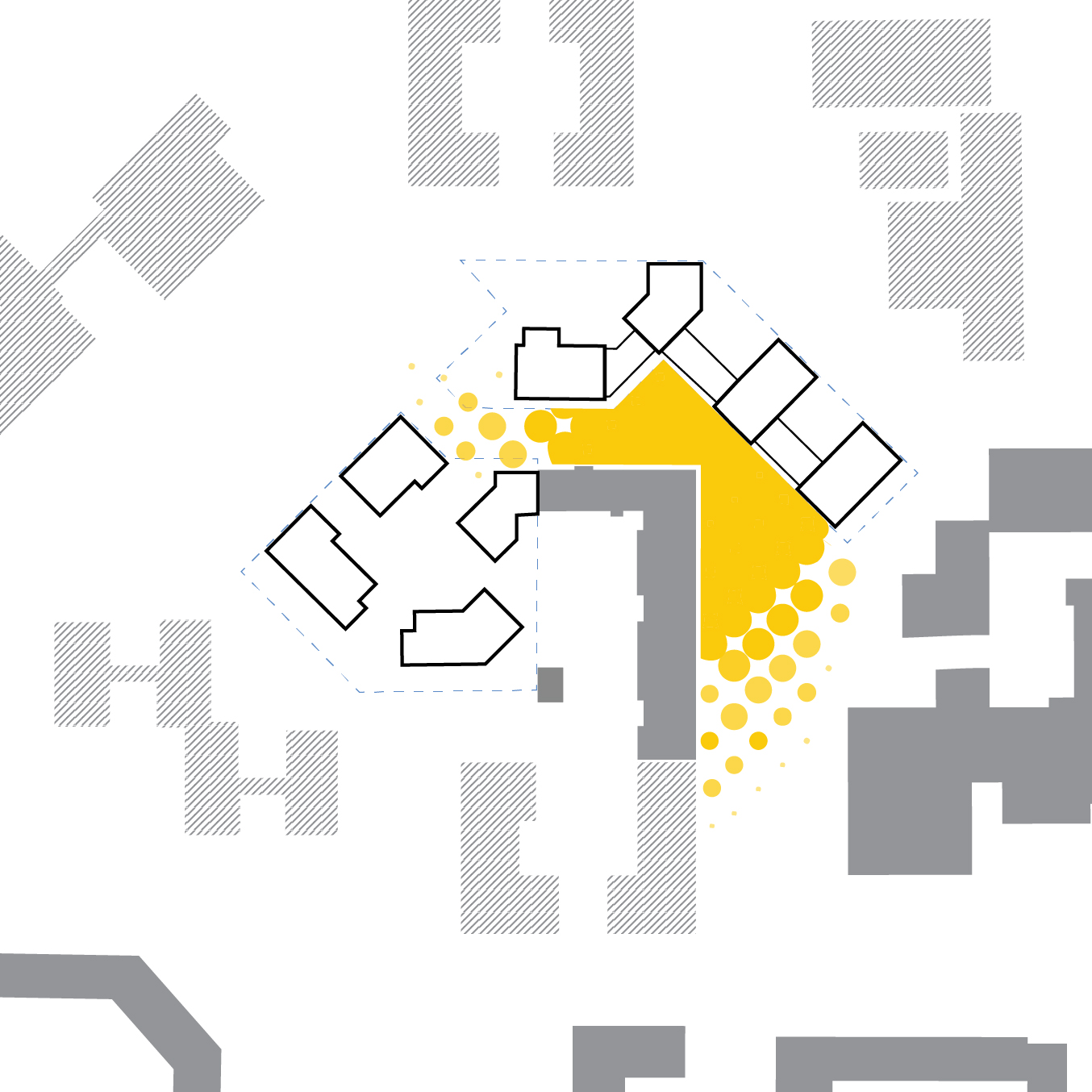
The spatial organization is based on pedestrian priority and minimized car infrastructure. The main entrances to underground parking and guest parking are concentrated in the already urbanized part of the site. This frees the courtyards from cars and avoids cutting new roads through green areas.
Underground parking is located mainly beneath the building footprints and along the perimeter. This preserves full-depth soil in the central, green areas of the site — for existing trees or for planting new large-caliper trees that will grow alongside residents.
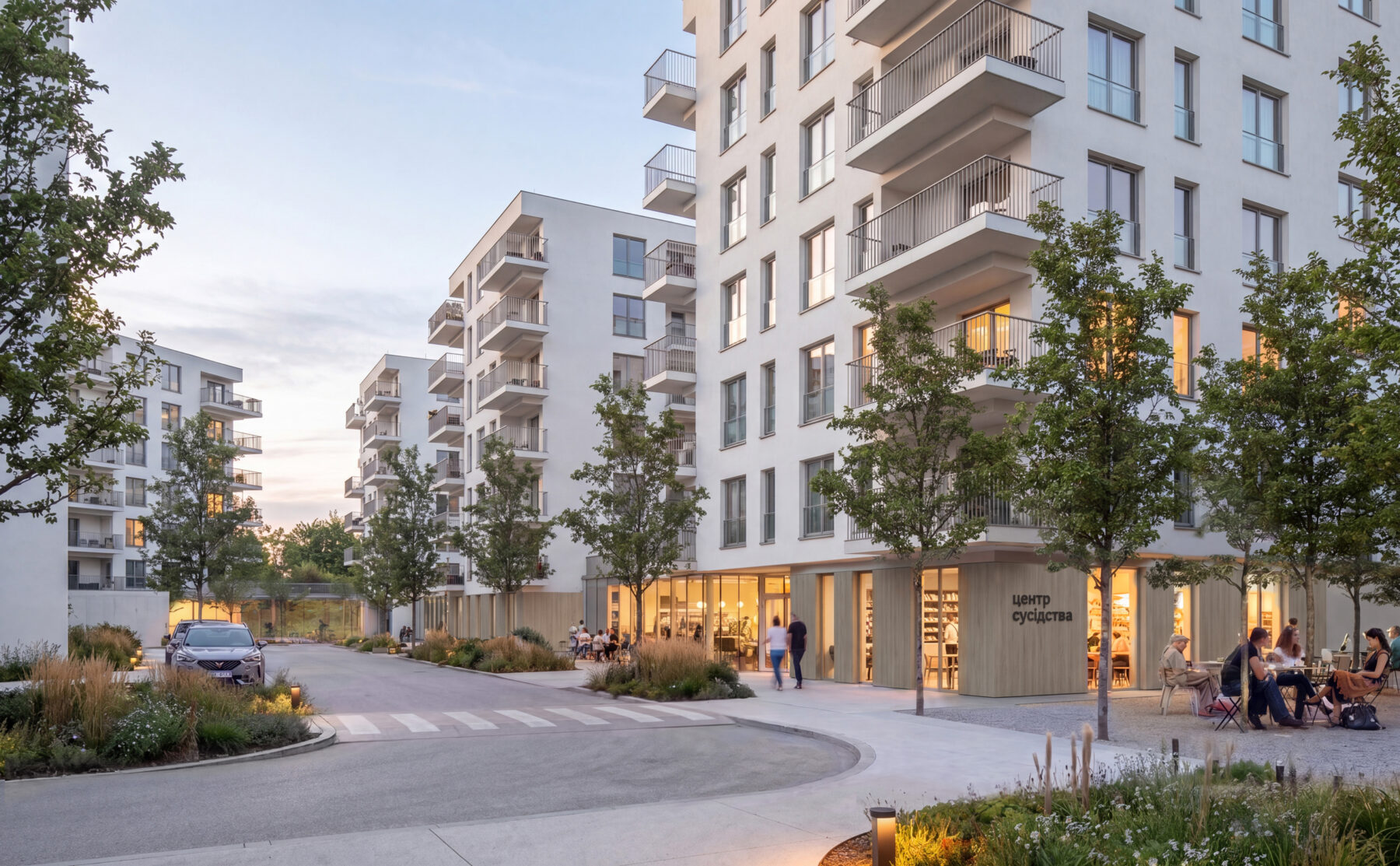
The project’s social infrastructure is integrated into the ground floors of the buildings. Commercial space and community facilities are arranged around the active urban square and along the green belt, functioning as spaces for communication, learning, support, and gathering among different age groups.
The outer green belt links the complex to adjacent areas, including existing and planned educational facilities. In this way, the project extends beyond the boundaries of the site, forming new connections within the urban fabric and supporting the development of the local community.
- Location: Lviv, Riasne-2
- Site area: 9 929 m²
- Total building area: 17 315 m²
- Apartment area in the building: 16 029 m²
- Status: Competition entry, First Prize
- Year: 2026
- Team: Markiian Maksymiuk, Solomiia Halayko, Ihor Maksymiuk, Zakhariy Hrachov, Stanislav Khrypta, Viktoriia Vitovska, Valeriia Debretseni
- Location: Lviv, Riasne-2
- Site area: 9 929 m²
- Total building area: 17 315 m²
- Apartment area in the building: 16 029 m²
- Status: Competition entry, First Prize
- Year: 2026
- Team: Markiian Maksymiuk, Solomiia Halayko, Ihor Maksymiuk, Zakhariy Hrachov, Stanislav Khrypta, Viktoriia Vitovska, Valeriia Debretseni